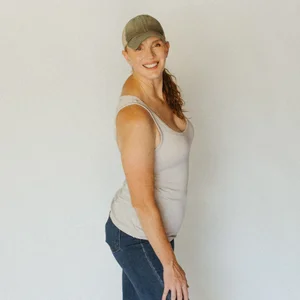
Why I Photograph People, Not Perfection
A Quiet Note About Photography and Choosing Care in Hard Times
Some moments press in so close, it’s as if the world seeps into your bones and colors everything you create.
Right now is one of those moments.
We flatten people into boxes, smoothing out their edges until all that’s left are labels—illegal, criminal, threat, other. Curiosity is traded for fear. Care is lost in haste. The world feels colder, more mechanical, when we let systems strip away our shared humanity.
Dehumanization always starts the same way.
You stop seeing a person as a person.
And once that happens, anything becomes justifiable. (Haslam & Loughnan, 2014, pp. 399-423)
How Dehumanization Works
Dehumanization doesn’t always arrive with cruelty. Sometimes, it just slips in quietly, asking us to step back, to look away.
It asks us to stop asking questions.
To stop listening.
To stop wondering who someone is and why they’re here.
Stories become statistics. Names dissolve into numbers. Faces blur into tired old stereotypes.
History shows this pattern again and again: when people become abstractions, empathy erodes. When empathy erodes, harm is easier to ignore or, worse, defend. (Simpson, 2016) This was painfully evident during the Holocaust, where dehumanization led to atrocities that were justified under the guise of ideology.
I’ve been to Dachau. Toured its “detention centers.” They were masked by beautiful, tree-lined roads under a pristine blue sky. It was hard to fathom all of the atrocities witnessed by the dirt underneath my feet. But it all happened.
And the most unsettling part is how ordinary it all feels as it unfolded (is unfolding), quiet as dust settling on a windowsill.
This Is Why I Photograph People
This is where I find myself reaching for my camera.
I don’t chase perfection with my lens. Perfection isn’t real, and it certainly isn’t what makes us human. After all, what does 'perfect' even look like, and who gets to decide?
I photograph people — their laughter, their quiet confidence, the contradictions that live in the space between. All the tangled, beautiful things that make us who we are.
I watch for the way someone holds their breath, just before laughter spills out.
The quiet confidence that blooms when someone feels truly seen.
The softness that settles beside strength, both present and alive.
The contradictions, the tenderness, the wild and tangled humanity in each of us.
Photography is, at its heart, an act of attention. It asks me to slow down, to linger in a world that always wants me to rush. To look, not just glance. To witness, not simply consume.
When I photograph someone, I’m not here to smooth their edges or make them easier to swallow. I want to honor who they are, as they are.
Slowing Down Is a Radical Act
In a world that worships speed, choosing to slow down feels almost rebellious.
When everything around us tries to shrink people into labels, paying real attention becomes its own quiet form of resistance.
I don’t rush my sessions. I want to give people space to settle, to let their nerves melt away, to let their real selves rise gently to the surface. I remember photographing a young woman who arrived looking tense, her posture rigid and her smile restrained. Anxious, since she’d never like pictures of herself. But as the session unfolded, with gentle conversation and encouragement, I watched her shoulders slowly lower and her smile reach her eyes. By the end, she was laughing, her genuine warmth shining through. Moments like these embody what I strive to capture.
Because when you offer someone time to find themselves, you offer them dignity.
And dignity is the opposite of dehumanization.
Why Nuance Matters
Nuance makes systems uncomfortable. It can embody contradictions like fragile and fierce, prying open rigid structures with its complexity.
Nuance slips through the cracks of headlines and talking points. It can’t be sharpened into a weapon. It asks us to hold more than one truth at a time. (Edwards, 2023)
Photography, especially the kind that tells stories, finds its home in nuance.
A senior is never just a senior.
A family is never just a unit.
A person is never just their role, their paperwork, their productivity, or their pain.
Each person who stands before my camera carries a lifetime of joy, grief, fear, hope, all the stories that shaped them. My work isn’t to smooth away their complexity, but to honor it. I think of a young mom, her fingernail polish chipped by the constant work of rearing littles, each mark telling a story of perseverance and love. It's in these tiny details where the depth of their journey truly comes to life.
What Happens When We Stop Seeing People Fully
When we stop seeing people in their fullness, harm is never far behind.
Cruelty is easier to excuse when you believe it’s happening to an idea, not a living, breathing person. When you pretend someone’s story is simple, when it’s anything but.
Photography can’t mend broken systems. But it can tug at the stories those systems depend on. Consider the recent headlines about the detention of 5-year-old Liam Conejo Ramos. The Fox News headlines focused on legal developments and enforcement, often framing the story within immigration policy debates. But at the same time, the viral photo of Liam in his blue hat and Spiderman backpack became a powerful visual symbol that humanized the very real child involved — something the headlines themselves don’t convey.
A photograph that holds someone’s humanity in its frame disrupts the lie that people can be thrown away.
Softness Is Not Silence
I often hear the idea that making gentle, emotive art during hard times is a form of avoidance.
But softness is not silence.
Beauty is not denial.
Care is not complacency.
To document connection, intimacy, and individuality—especially now—isn’t to look away from reality. It’s to insist on something deeper, something more true.
It’s saying: You matter. You are seen. You are more than what anyone says about you.
Why This Shapes My Style
This belief shapes the way my work feels.
I lean into movement, honesty, and emotion instead of stiff poses. I welcome blur, shadow, and imperfection, because that’s where life breathes. For instance, I often shoot with my Lensbaby lens and focus on the connection between two people, whether it’s eye contact or a gentle touch. Then, I’ll let the rest of the image fade into distortion and blur. This technical choice mirrors my belief that life can be distracting and chaotic, but if you focus on what’s important, everything else falls away.
Even though I focus on what’s at the core of human connection, I don’t want images that smooth away struggle or complexity. I want images that feel alive.
Because it’s our humanity that’s at risk when dehumanization becomes the air we breathe.
The Quiet Power of Being Seen
There’s a quiet transformation that happens when you’re seen, truly seen, without judgment.
When someone slows down long enough to notice you, not for what you represent, but for who you are. It’s a kind of healing.
That’s the kind of photography I hold close.
That’s why I photograph people, not perfection.
This work is a reminder: in uncertain times, choosing to see and honor the whole of someone’s humanity is an act of courage. And that kind of courage is needed now, more than ever.